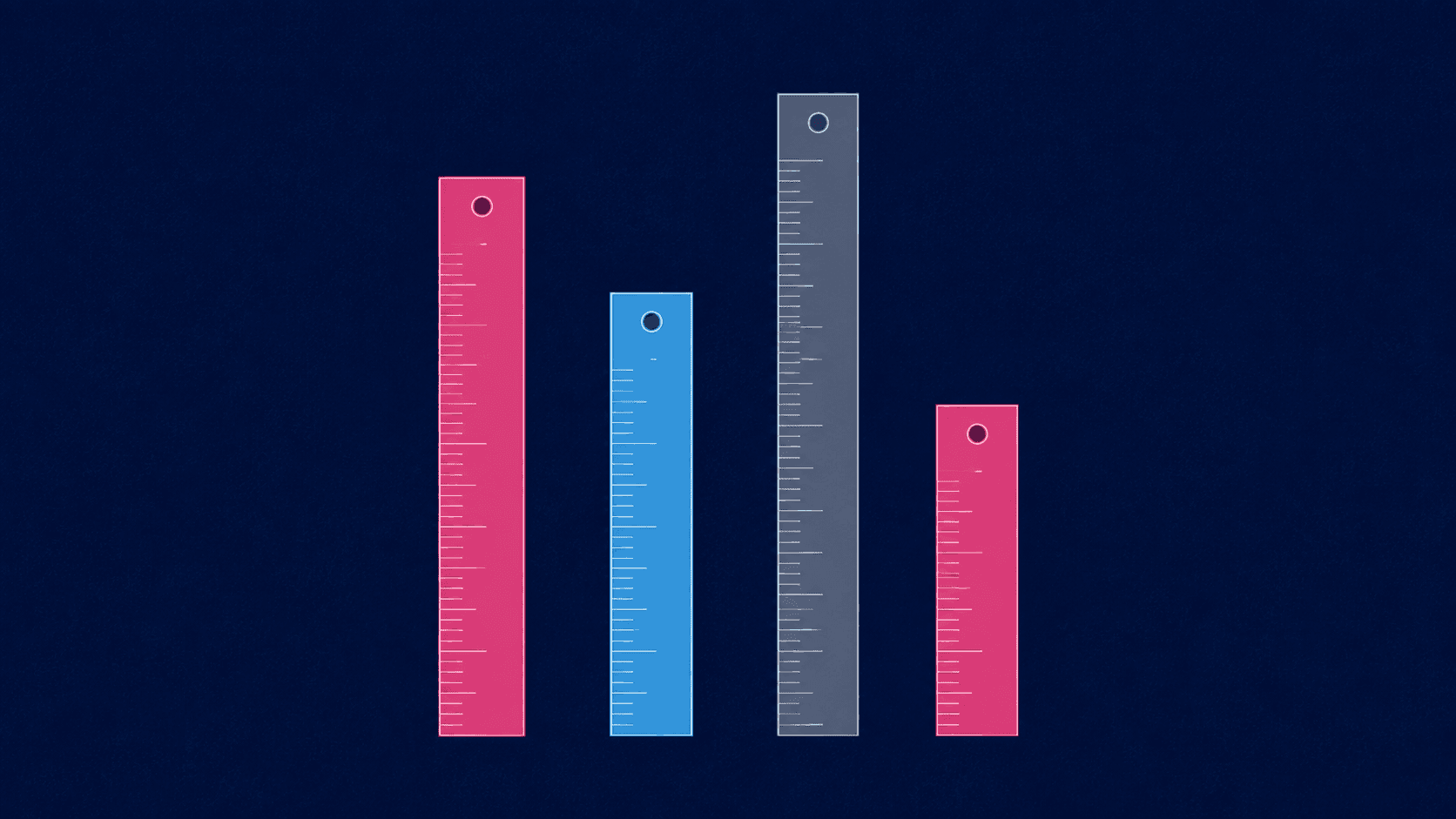
In the second quarter of 2026, Fotocasa puts the price of existing housing at €3,133 per square meter. For the same quarter, Gesvalt reports €2,041. That's a difference of €1,192 over the same period, in the same country. Both publications are reputable and neither is wrong. They simply measure different things, and confusing the two leads to poor decisions.
Six sources, six figures, one single quarter
Spanish real estate price publications fall into three categories: asking prices, appraised values, and prices actually recorded in deeds. Each category produces a different level of variation, and the gap between them is structural, not accidental.
Source | Figure published | What is measured |
|---|---|---|
Fotocasa | €3,133/m², old | Price asked in the ads |
idealist | €2,823/m², old | Price asked in the ads |
Property records | €2,429/m² | Price recorded in the registered deeds |
Gesvalt | €2,041/m² | Estimated value of the park |
INE | Index, up 12.9% year-on-year | Notarial acts, without absolute level |
Expertise firms | €292,417 per dwelling | Average appraisal value |
The three data families
Understanding what each one contains is enough to avoid being tricked.
- Asking prices come from online portals. They reflect what sellers hope for, not what they actually get. They are available in real time and only cover properties currently for sale, so the most expensive ones remain listed longer and have a greater impact on the average.
- The appraisal values come from valuation companies. They are used by banks to calculate financing. They cover the entire portfolio, including properties that are not for sale, which explains the lower level.
- The agreed prices come from notarial deeds and registers. This is the only data that describes actual transactions, but it arrives with a delay of two to four months, the time it takes for the deeds to be registered.
Comparing the price of a listing to a portal average and then concluding that the property is expensive or cheap is misleading. You're comparing a specific demand to an average of the same demand. To accurately determine a price, you need data from similar transactions in the same area, not the national average for listings.
Which source for which question?
Your question | The source to use |
|---|---|
Is this advertised price in line with the market? | Prices recorded in the registers or by the notary, in the same municipality |
Is the market going up or down? | INE index, which neutralizes compositional effects |
How much will the bank finance? | Expert appraisal value, not the advertised price |
On what basis will I pay the tax? | Cadastral reference value |
At what price can I expect to resell? | Signed prices, along with the transaction volume in the area |
The INE index requires clarification. It does not publish a price per square meter, only a change in price. Its methodology neutralizes the fact that the properties sold are not the same from one quarter to the next, making it the most reliable benchmark for measuring a trend. In the first quarter of 2026, it recorded an annual increase of 12.9%, with 13.5% in existing properties and 9.1% in new builds.
The three prices for the same accommodation
A single apartment simultaneously carries three different values, and each serves a specific purpose.
Value | Who fixes it | What is it used for? |
|---|---|---|
Asking price | The seller | Starting point of the negotiation |
Expertise value | The valuation company commissioned by the bank | Funding ceiling granted |
Reference value | The Directorate General of Land Registry | Basis for calculating transfer tax |
These three values can differ significantly for the same property. Successful negotiation lowers the first value without affecting the third, and this is precisely why taxes don't decrease when you negotiate well.
An apartment has three prices at the same time: the price you negotiate, the price the bank retains, and the price on which you pay tax.
Price means nothing without volume
In the second quarter of 2026, the registries recorded 167,934 transactions, a decrease of 5.7% over the quarter and 2.3% year-on-year. This is the lowest level in the last seven quarters. Prices, however, continue to rise.
This combination has a precise interpretation. Prices rising while volumes fall do not indicate overheated demand. They indicate insufficient supply: fewer goods are changing hands, and those that are sold are fetching higher prices. A price increase driven by volume and a price increase driven by scarcity have different consequences for a buyer, particularly regarding liquidity when it comes time to resell.
A second signal appears in the same publication. Foreign buyers accounted for 15.98% of transactions, a record high in the entire historical series, while the global market declined. International demand is increasing while domestic demand is weakening.
The gap between cities exceeds the gap between sources
National averages mask considerable dispersion. In the second quarter of 2026, the gap between the most expensive and least expensive capital cities exceeds a ratio of one to four.
Capital | Average price |
|---|---|
Saint Sebastian | €4,815/m² |
Madrid | €4,441/m² |
Barcelona | €4,151/m² |
Lleida, Cáceres, Teruel | approximately €1,200/m² |
No national average describes a market. It describes the aggregate of a hundred or so local markets, some of which are growing by 15% while others are stagnating. The only data that matters for a specific purchase is that of the neighborhood, not the country.
How InvestPilot reads it
The relevant question is never the average price in a city. It's whether that particular property, on that particular street, is correctly positioned in relation to comparable transactions.
Strategy | Concerned | Concrete impact |
|---|---|---|
Primary residence | Yes | A poorly positioned price will be paid for at resale, even on a property occupied for ten years. |
Second home | Yes | Areas with high foreign demand rise faster and correct faster. |
Long-term rental | Yes | The entry price is the denominator of all profitability. It determines it more than the rent. |
Short-term rental | Yes | Same logic, with an added sensitivity to the seasonality of the area. |
Renovation and resale | Yes | The margin depends entirely on the difference between the purchase price and comparable signed prices. |
InvestScore compares each property in the catalog to transactions in its area, not to a national average of listings. You can see where the asking price stands in relation to what is actually being sold nearby.